

Content strategy
Location pages need more than a city name
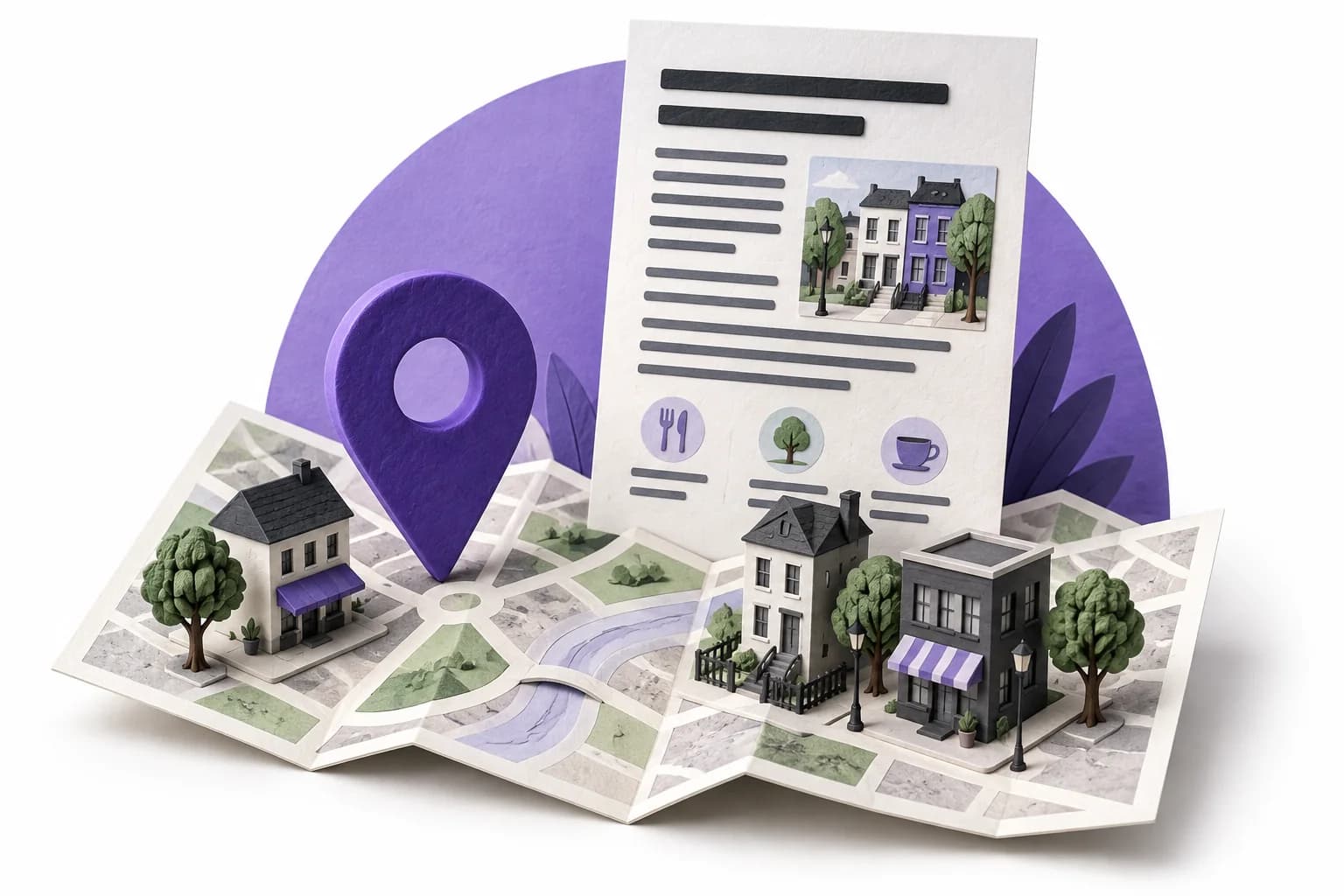
A better local content plan connects service pages, neighborhood guides and blog articles to different customer questions.
The useful takeaway
Give every local page a clear job. Add details that are true of the place and your work there, then connect the page to a useful next step.
Open two location pages on the same website. If changing the city name makes them interchangeable, a customer has little reason to read both. The business may serve both places, but the pages have not explained anything distinctive about that service.
Useful local content starts with the questions people need answered. Some belong on a service page. Others need a neighborhood guide or a more focused article. Publishing more pages is not a substitute for making those choices.
Decide what the page is supposed to do
A location service page helps a visitor decide whether a business can serve them and what happens next. An area guide helps them understand a place. A blog article answers a narrower question in enough detail to be useful. One page may serve more than one purpose, but it should have a clear primary job.
An air-conditioning company might need a service page describing its actual coverage and appointment process in a city. A separate article could explain what a homeowner should gather before requesting an estimate. A real estate business might need a neighborhood guide addressing housing types, access and amenities, with changing facts linked to current sources.
Local keyword research can reveal how people phrase those needs. Semrush's local keyword research guide discusses location and service intent. Use that research to understand the question behind a phrase, then choose the page that can answer it best.
Add local detail you can support
Useful detail comes from actual knowledge: the kinds of jobs the business handles in an area, a documented project example, an explanation of its service boundaries or reliable local resources. Naming nearby landmarks without connecting them to the reader's decision adds little.
Be especially careful with facts that change. Prices, regulations, school boundaries and market statistics need a source and a date. If the team cannot verify a claim, remove it or explain the uncertainty. AI can help organize research, but it cannot turn an unsupported local assertion into firsthand expertise.
Google's people-first content guidance emphasizes helpfulness, original value and trust. It also explicitly rejects the idea that Google has a preferred word count. A concise, specific page can do a better job than a long page filled with generic descriptions. Google's helpful content guidance
Make the page easy to scan and easy to use
The title should identify the subject accurately. The main heading should confirm that the visitor reached the right place. Supporting headings should divide the information by real questions or tasks, rather than repeat variations of the same keyword.
For a service page, a useful sequence might be: what is available in this area, what the service includes, what can affect the scope, evidence of relevant work and how to request help. For an area guide, the sequence will be different. Let the reader's decision shape the structure.
Give the meta description a separate job: summarize the page honestly and make its relevance clear. It should not promise information the page lacks. Search engines can select different snippet text, so an audit should distinguish the description in the page's code from the snippet actually observed in search.
Use the blog to answer the next question
A local blog should have a relationship to the business's expertise. Start with questions from consultations, support calls and sales conversations. Which ones need an explanation too detailed for a service page? Which are especially relevant to customers in the areas you serve?
Connect the resulting article to the relevant service or area page with a link that explains where it leads. Add a link back where the article would help a reader. This creates a useful path through the site; a list of loosely related posts at the bottom of every page may not.
Avoid publishing the same answer once for every city unless there is a meaningful local difference. If the advice is identical, one strong article may serve several location pages. If the answer differs, explain and support that difference.
Judge the page by its job, not only its traffic
A niche service page may attract fewer visitors than a broad educational article while bringing in more relevant inquiries. Review search queries, page visibility and customer actions together where reliable data is available. Estimated search traffic can identify candidates for a closer look; it cannot replace actual analytics or tell you how many customers contacted the business.
A useful content audit names the page, explains the gap and proposes a specific improvement. For example: 'This neighborhood guide lists amenities but gives no supporting sources or dates for changing facts. Verify those claims and add source links before expanding the guide.' That is an assignment a writer can complete and an editor can review.
- Is the page's purpose clear?
- Does it contain relevant local detail the business can support?
- Do its headings organize useful information?
- Are changing claims sourced and dated?
- Does it connect to an appropriate next step?
Visibility Insider
Practical reporting and clear explanations for a more visible business. Sources are linked alongside the relevant findings.